Clean-Label Digestive Enzyme Supplements: Formulation Claims, Excipients, and Manufacturing Reality
Clean label is no longer just a retail-facing phrase. For formulation managers, it changes how a digestive enzyme supplement is built, specified, documented, and scaled.
A cleaner label can mean fewer excipients, recognizable carrier systems, vegetarian capsule choices, allergen-aware sourcing, non-GMO positioning, or simplified blend architecture. But digestive enzymes are technical ingredients. They must remain stable, flowable, compatible, and manufacturable across real production conditions.
For brands sourcing bulk digestive enzymes for supplement manufacturers, the challenge is to align marketing intent with manufacturing reality before the first pilot batch.
What “Clean Label” Usually Means in Digestive Enzyme Formulation
There is no single universal definition of clean label in supplements. In practice, manufacturers often use it to describe a combination of:
- Minimal excipient systems
- Vegetarian or plant-origin capsule positioning
- Non-GMO ingredient preference
- Allergen-conscious sourcing and documentation
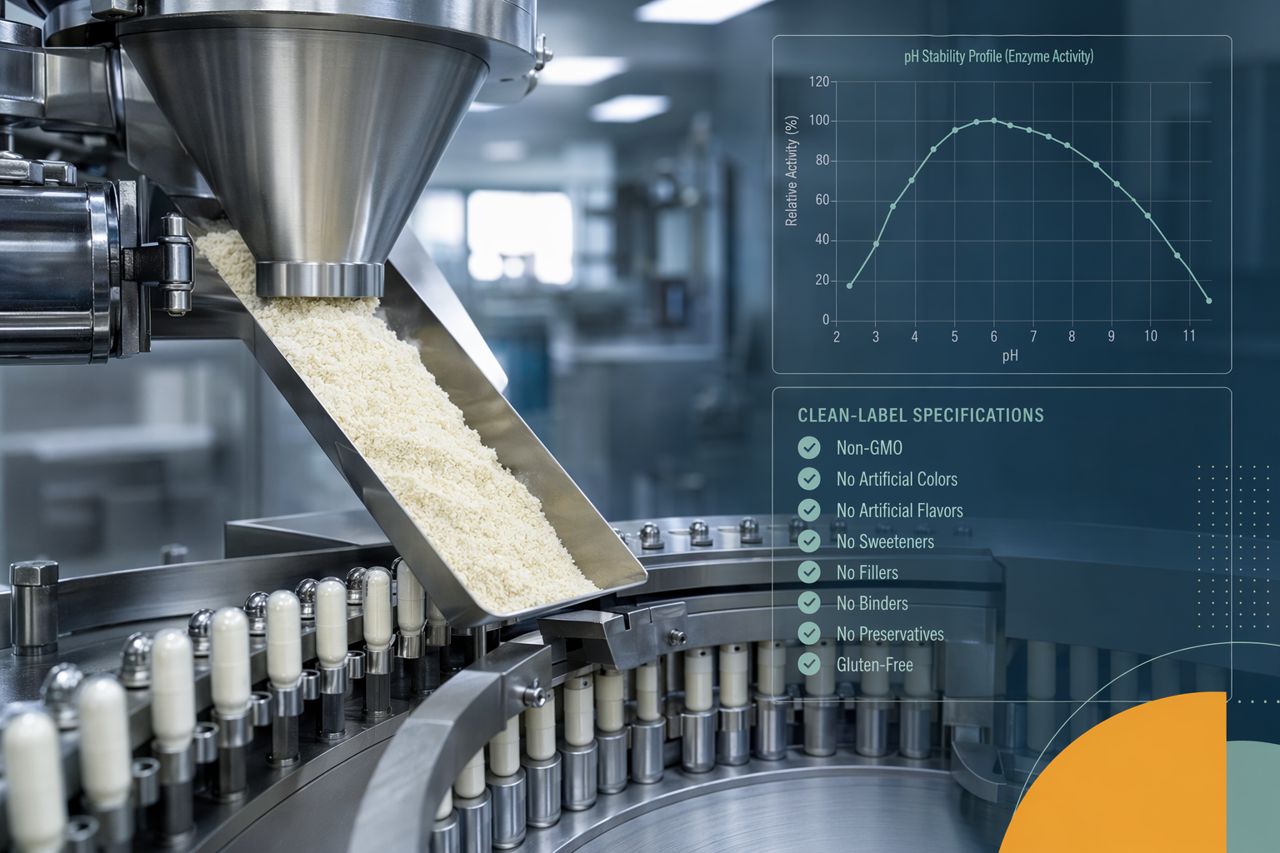
- Avoidance of unnecessary colors, flavors, and sweeteners
- Transparent enzyme class declarations on the Supplement Facts panel
- Preference for recognizable processing aids and carriers
- Compatibility with vegan, dairy-free, gluten-free, or similar label objectives where substantiated
The important point: clean label should be translated into a technical specification, not left as a broad marketing request.
A better internal question
Instead of asking, “Can this be clean label?” ask:
- Which excipients are acceptable?
- Which certifications or statements are required?
- Which capsule shell is preferred?
- Which allergens must be controlled or disclosed?
- Which dosage form is planned?
- Which enzyme classes are essential to the product concept?
- Which claims will appear on pack, and what documentation supports them?
That question set gives procurement, R&D, QA, and contract manufacturing a shared starting point.
Claims: Keep the Language Formulation-Safe
Digestive enzyme products are commonly positioned around support for digestion of macronutrients such as proteins, carbohydrates, fats, lactose, and fiber-rich foods. Clean-label concepts often pair these with simpler ingredient lists and transparent blend design.
For B2B development, claim planning should stay practical:
- Match each claim theme to the enzyme class present in the blend.
- Avoid broad therapeutic language.
- Confirm whether the claim is structure/function, ingredient identity, or general product positioning.
- Maintain documentation showing ingredient purpose and label rationale.
- Keep marketing language consistent with the finished formula, not just the concept deck.
A clean label does not reduce the need for disciplined substantiation. In many cases, it increases it because fewer ingredients are expected to do more work.
Enzyme Class Selection: Build Around the Eating Occasion
Digestive enzyme blends are usually more credible when they are designed around the intended use case rather than a long list of enzymes.
Broad daily digestive support
A balanced multi-enzyme blend may include protease, amylase, lipase, cellulase, lactase, and other carbohydrate-focused enzymes depending on the product concept. The goal is coverage across common dietary components without creating an overloaded label.
Protein-focused formulas
Protein digestion formulas often prioritize protease selection and pH compatibility. These products may be paired with sports nutrition, high-protein diets, or meal support positioning, but the enzyme blend still needs stability and capsule-fill practicality.
Dairy or lactose-positioned products
Lactase-centered formulas require careful label clarity and allergen documentation. If the formula is intended for dairy-sensitive consumers, ingredient origin, cross-contact controls, and claim wording must be reviewed early.
Plant-forward or fiber-heavy diets
Cellulase, hemicellulase, alpha-galactosidase, and related carbohydrate-focused enzymes may be considered for products positioned around legumes, vegetables, grains, or high-fiber eating patterns. These blends can create formulation complexity, so compatibility checks matter.
Excipients: The Clean-Label Trade-Off Most Teams Underestimate
Excipients are often the first target in a clean-label reformulation. They are also the reason many prototypes fail during production.
Digestive enzyme powders can be fine, hygroscopic, cohesive, or sensitive to processing conditions. A label with fewer excipients may be attractive, but the powder still has to:
- Flow consistently into capsules or stick packs
- Avoid segregation during blending and transfer
- Maintain blend uniformity
- Protect potency through shelf life
- Fit the target capsule size or serving weight
- Run efficiently on commercial equipment
- Meet microbiological and heavy metal expectations
Common formulation questions include whether to use a carrier, a flow aid, a moisture-management component, or a capsule-compatible filler. The clean-label answer is not always “remove it.” Often, the better answer is “choose the least disruptive excipient that protects the finished product.”
Capsule, Powder, or Chewable? Dosage Form Changes the Rules
Capsules
Capsules are the most common format for digestive enzyme supplements because they support precise fill targets, broad blend options, and straightforward consumer use. Clean-label capsule decisions often focus on vegetarian shells, color-free presentation, and excipient minimization.
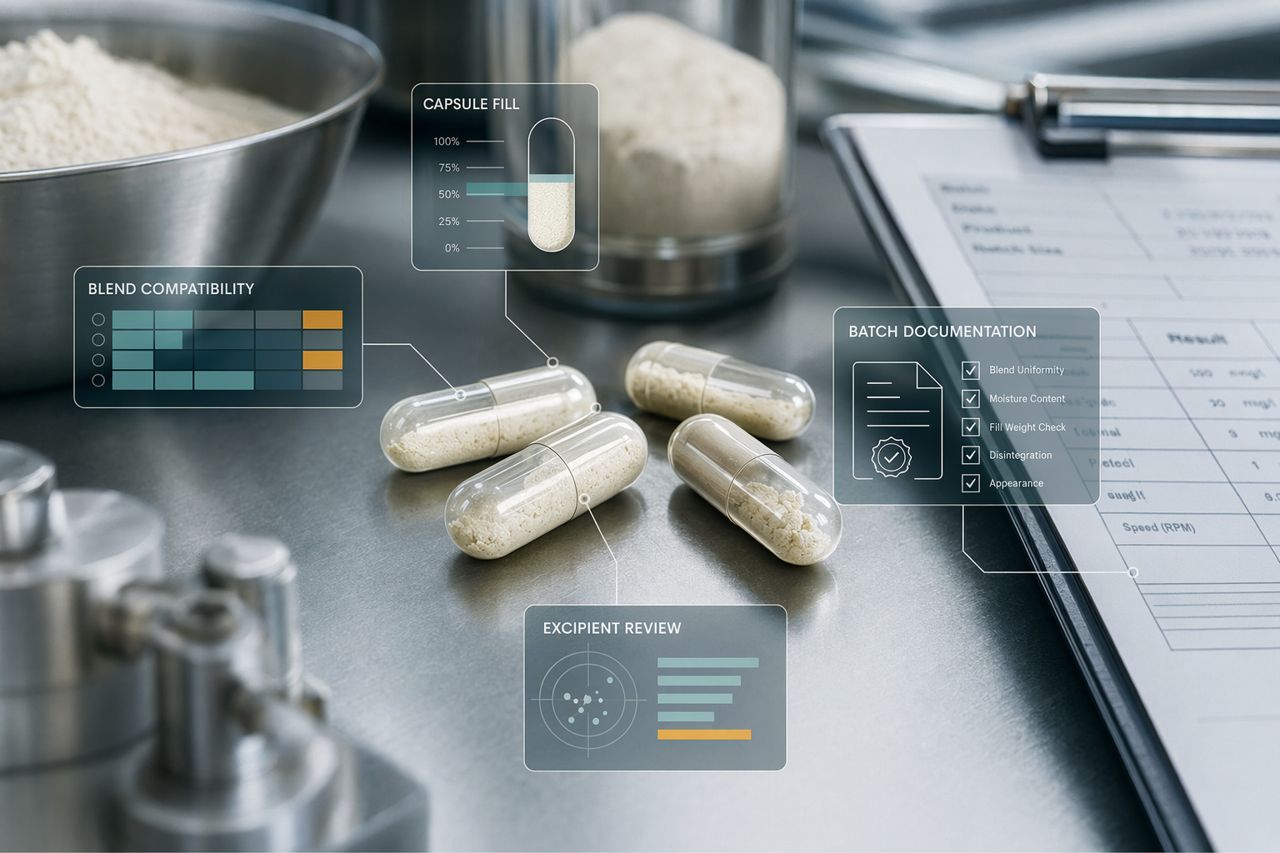
Manufacturing reality: capsule fill depends on density, flow, and compressibility. A clean formula that looks good on paper may require particle-size adjustment or a revised carrier approach to run efficiently.
Stick packs and sachets
Powder formats can work for drink mixes or meal-support concepts, but flavor, mouthfeel, dispersibility, and moisture exposure become more important. Enzyme powders are not automatically pleasant in direct-to-consumer powder systems.
Manufacturing reality: powder blends need attention to dusting, static, segregation, and packaging barrier selection.
Chewables and gummies
These formats can support consumer-friendly positioning but are technically more restrictive. Processing conditions, water activity, pH, flavor masking, and ingredient compatibility need early review.
Manufacturing reality: not every enzyme blend is suitable for high-moisture or heat-exposed formats. The clean-label brief should not override enzyme stability.
Compatibility: Clean Labels Still Need Technical Screening
Digestive enzyme blends can interact with minerals, acids, botanicals, probiotics, flavors, sweeteners, and other actives. Even when all ingredients are individually acceptable, the finished blend may introduce stability or processing issues.
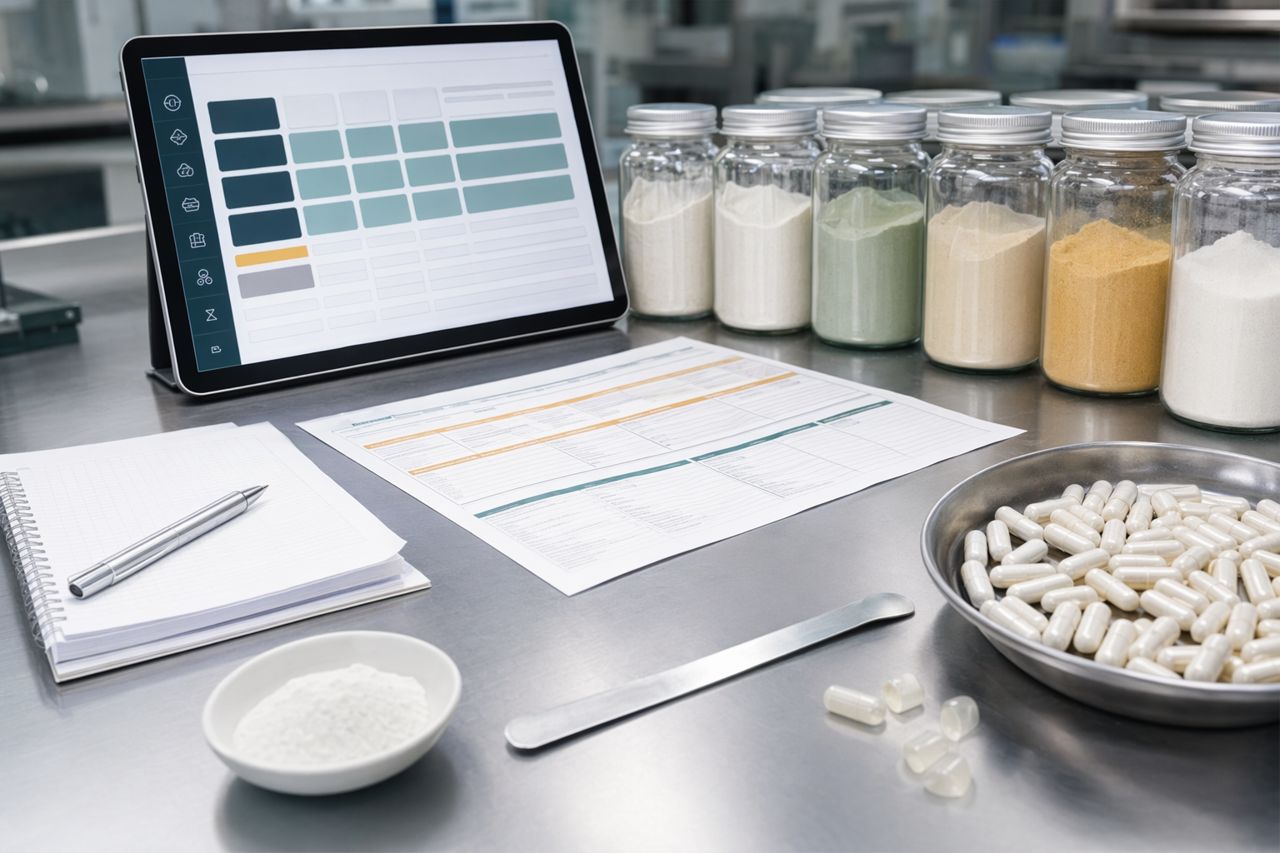
Compatibility screening should address:
- Moisture sensitivity
- pH environment
- Oxidation exposure
- Particle-size mismatch
- Blend segregation risk
- Capsule shell interaction
- Packaging barrier requirements
- Shelf-life expectations
This is where formulation-led sourcing matters. A supplier should understand not only the enzyme ingredient, but also how it behaves in the dosage form you plan to commercialize.
Documentation Buyers Should Request
For clean-label digestive enzyme development, documentation is part of the product architecture. Buyers should request and organize the following before scale-up:
- Ingredient specification sheets
- Certificate of analysis format and release criteria
- Allergen statements
- Non-GMO statements where required
- Origin and manufacturing-flow information where available
- Microbiological and contaminant documentation
- Vegetarian, vegan, kosher, halal, or other statements if relevant
- Stability guidance or available stability data
- Label-support documentation for enzyme identity and intended function
- Change-control expectations for future supply continuity
A strong documentation package reduces delays with QA, contract manufacturers, retailers, and brand partners.
Sourcing Consistency: The Quiet Risk in Clean-Label Enzyme Products
Clean-label brands often want simple labels and tight claims. That makes ingredient consistency more important, not less.
When evaluating bulk digestive enzymes, formulation teams should assess:
- Lot-to-lot specification consistency
- Source continuity
- Lead-time reliability
- Regional supply exposure
- Documentation response time
- Technical support during pilot and commercial runs
- Ability to support custom blends or private-label specifications
A low-friction sample can still become a high-friction commercial ingredient if supply, documentation, or blend behavior changes under production pressure.
Manufacturing Reality: Build the Formula for Scale, Not Just Sampling
Bench prototypes are useful, but commercial manufacturing introduces additional constraints. Bulk density, powder flow, capsule capacity, blending sequence, equipment shear, humidity, hold time, and packaging speed can all affect the finished product.
Before committing to launch specifications, formulation managers should confirm:
- Target dosage format and serving architecture
- Capsule size or powder serving weight
- Excipient limits and acceptable alternatives
- Packaging format and moisture barrier expectations
- Label claims and required substantiation
- Pilot batch observations from the intended manufacturer
- Shelf-life plan and reserve-sample strategy
- Commercial batch documentation requirements
The cleanest label is the one that still works after procurement, QA, manufacturing, and stability review.
How CapsuleForge Supports Clean-Label Digestive Enzyme Programs
CapsuleForge works with supplement manufacturers developing digestive enzyme capsules, powders, and custom blend concepts. Our support is formulation-led, with emphasis on technical fit, documentation readiness, and scale-up practicality.
We can help evaluate:
- Enzyme class selection for the intended product concept
- Bulk digestive enzyme sourcing options
- Excipient and carrier strategy for clean-label targets
- Capsule and powder compatibility considerations
- Custom blend feasibility
- Documentation requirements for QA review
- Scale-up questions before commercial production
We do not treat clean label as a slogan. We treat it as a set of formulation constraints that must be translated into a manufacturable specification.
Practical Checklist for Your Next Clean-Label Enzyme Brief
Use this as a starting point before requesting samples or pricing:
- Define the target consumer and eating occasion.
- List the enzyme classes required to support the product concept.
- Confirm the dosage format: capsule, stick pack, sachet, chewable, or other.
- Set clean-label boundaries for excipients, capsules, allergens, and certifications.
- Identify claims that require documentation or regulatory review.
- Confirm target serving size and capsule-size constraints.
- Review compatibility with minerals, botanicals, probiotics, acids, flavors, or sweeteners.
- Request specification, allergen, origin, and quality documentation early.
- Discuss commercial manufacturing conditions before locking the formula.
- Plan for stability, packaging barrier, and future lot continuity.
Request a Quote
Developing a clean-label digestive enzyme supplement or reformulating an existing product? Share your target dosage form, enzyme classes, clean-label requirements, and estimated production volume.
Request a quote through our on-site form and CapsuleForge will help you review sourcing, blend feasibility, documentation, and scale-up considerations.