How Contract Manufacturers Quote Digestive Enzyme Capsule and Tablet Projects
For formulation managers, a digestive enzyme quote is not just a price per bottle. It is a cost model built around ingredient specification, blend behavior, capsule or tablet format, quality documentation, packaging decisions, and scale-up risk.
If you are sourcing bulk digestive enzymes for supplement manufacturers, the most accurate quotes usually come from the clearest technical briefs. The more defined your formula, target label presentation, documentation requirements, and production assumptions are, the faster a contract manufacturer can price the project without building excessive contingency into the estimate.
This guide explains how digestive enzyme capsule and tablet projects are typically quoted, what information improves quote accuracy, and where formulation decisions can influence cost, timeline, and manufacturability.
Why digestive enzyme projects are quoted differently
Digestive enzyme products are technically different from many standard vitamin, mineral, or botanical capsule projects. They often involve multiple enzyme types, each with its own specification profile, sensitivity to processing conditions, and compatibility considerations inside a blend.
A contract manufacturer may need to evaluate:
- The number of enzyme ingredients in the formula
- The target potency statement and label presentation
- Whether the formula uses single enzymes or a custom complex
- Compatibility with minerals, acids, probiotics, botanicals, flavors, or excipients
- Moisture sensitivity and packaging requirements
- Capsule fill behavior or tablet compression behavior
- Documentation expectations for raw materials and finished goods
- Batch size, forecast volumes, and repeat-order planning
For this reason, two formulas with similar serving sizes can quote very differently.
The core inputs a manufacturer needs before quoting
A strong quote request should include more than a concept name and desired count size. To avoid delays, prepare a formulation brief that covers the commercial, technical, and quality requirements.
1. Formula target and ingredient list
Start with the intended enzyme profile. Include the enzyme types you want in the blend and whether you are open to equivalent alternatives based on sourcing, compatibility, or cost.
Common digestive enzyme formula categories include:
- Broad-spectrum digestive enzyme blends
- Protease-forward protein digestion formulas
- Carbohydrate-focused enzyme blends
- Dairy-focused formulas with lactase positioning
- Plant-based digestive enzyme capsules
- Enzyme blends paired with botanicals, probiotics, or minerals
A manufacturer can quote more accurately when the formula brief separates required ingredients from flexible ingredients. Flexibility can help procurement identify consistent supply options and avoid unnecessary cost from overly narrow specifications.
2. Target potency and label presentation
Digestive enzymes are commonly specified by functional potency rather than simple ingredient weight. For quoting, the manufacturer needs to understand how potency will be represented on the label and specification sheet.
Useful inputs include:
- Target potency per serving
- Number of capsules or tablets per serving
- Whether potency is stated per ingredient or as part of a proprietary blend
- Whether the finished product requires potency confirmation
- Any planned overage strategy to support shelf-life expectations
CapsuleForge does not recommend building a quote from ingredient weight alone when potency is central to the finished product concept. The quote should align ingredient purchasing, formula math, label claims, and release documentation from the start.
3. Dosage format: capsule or tablet
Format has a direct effect on quote structure.
Capsules
Capsule projects are often preferred for digestive enzyme blends because they can reduce exposure to compression stress. Quote drivers include capsule size, fill weight, powder density, flow behavior, capsule shell type, color, opacity, and whether the blend requires flow aids.
Tablets
Tablet projects require additional evaluation. Enzymes may be sensitive to compression force, heat generated during processing, and excipient choices. Tablet quotes may include more formulation development time, trial batching, tooling review, disintegration targets, coating considerations, and stability planning.
If your product must be a tablet, provide the manufacturer with target tablet size, shape, coating preference, swallowability requirements, and whether the formula can accept standard tableting excipients.
What affects cost in a digestive enzyme quote
A quote is usually built from several cost layers. Understanding those layers helps formulation managers make better decisions before procurement begins.
Raw material specification
Raw material cost depends on enzyme type, potency target, origin, grade, supplier consistency, and documentation package. A narrow specification may be necessary for some brands, but it can also reduce sourcing flexibility.
A quote may change depending on whether the manufacturer can source:
- A pre-blended digestive enzyme complex
- Individual enzyme ingredients for a custom blend
- Plant-derived or fermentation-derived options
- Ingredients with specific allergen, non-GMO, vegan, kosher, halal, or other documentation needs
- Suppliers with established lot-to-lot consistency
Blend complexity
A formula with ten active ingredients is not automatically difficult, but complexity increases when ingredients vary significantly in particle size, density, hygroscopicity, or processing sensitivity.
Complex blends may require:
- Additional blending validation
- Controlled ingredient addition order
- Flow improvement work
- Segregation risk review
- Pilot runs before commercial production
The goal is not simply to mix the formula. The goal is to manufacture a repeatable blend that fills, compresses, tests, and packages consistently.
Overages and shelf-life planning
Many enzyme products require a thoughtful overage strategy because potency can be affected by time, moisture, heat, and formulation environment. Overages increase ingredient usage, but under-planning may create release or shelf-life risk.
A manufacturer will usually evaluate overage based on:
- Ingredient sensitivity
- Packaging barrier protection
- Expected distribution conditions
- Finished product shelf-life target
- Testing plan and release criteria
A well-defined shelf-life strategy supports both compliance and commercial planning.
Excipients and processing aids
Excipients are not filler decisions only. They influence flow, fill consistency, tablet hardness, disintegration, appearance, and moisture exposure.
Quote discussions may include:
- Flow aids for capsule filling
- Disintegrants for tablets
- Binders and compression aids
- Moisture-control excipients
- Coating systems
- Clean-label constraints
If your brand has excipient restrictions, disclose them early. A cleaner label may be achievable, but it can affect manufacturability and cost.
Packaging configuration
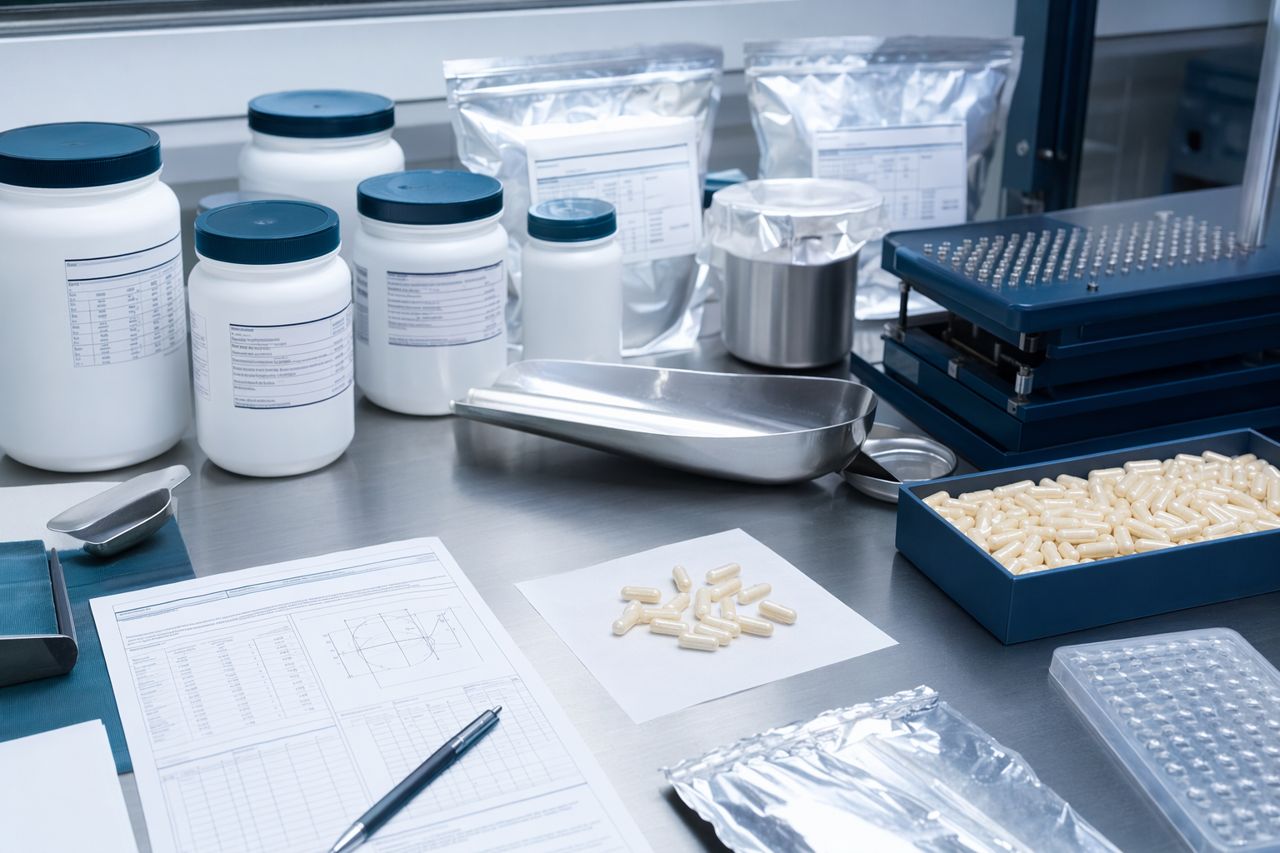
Packaging is especially important for enzyme formulas. Moisture exposure can influence finished product performance, so packaging decisions may be part of the technical quote rather than a cosmetic afterthought.
Common quote variables include:
- Bottle size and resin type
- Cap and liner selection
- Desiccant inclusion
- Induction seal requirements
- Count size
- Label application
- Carton or shipper configuration
- Bulk pack-out for downstream packaging
A quote for the same formula may differ materially between a standard bottle, a high-barrier configuration, and a bulk-packed intermediate.
Documentation that can change the quote
Dietary supplement manufacturers quote not only the physical product but also the quality and documentation burden required to support it.
Request clarity around:
- Ingredient specification sheets
- Certificates of analysis
- Allergen statements
- Non-GMO, vegan, kosher, halal, or other attribute documentation if required
- Country of origin information
- Supplier qualification expectations
- Finished product specification
- Label review support
- Batch production records
- Stability or retained sample expectations
More documentation can be commercially valuable, especially for retail, practitioner, export, or marketplace channels. It should be included in the quote assumptions rather than added late.
Why minimum order quantity is not the only volume question
Minimum order quantity matters, but a strong quote also considers forecast reliability and scale-up path. Enzyme raw materials may have lead times, supplier minimums, and potency-specific purchasing constraints.
A manufacturer may ask:
- Is this a launch batch, pilot batch, or replenishment batch?
- What is the expected annual volume?
- Will the formula remain locked after launch?
- Are multiple count sizes planned?
- Will the same blend be used across capsules, tablets, sachets, or powders?
- Is there a planned retailer or export deadline?
The more credible the forecast, the easier it is to plan raw material purchasing and production scheduling.
Common reasons quotes are delayed
Digestive enzyme quotes slow down when key technical decisions are missing or inconsistent. The most common blockers include:
- Label claims that do not match the formula brief
- Potency targets without a defined serving size
- Requests for tablets without compression feasibility review
- Unclear capsule size expectations
- Missing allergen or dietary attribute requirements
- Packaging selected without moisture considerations
- Ingredient restrictions disclosed after pricing
- Finished product testing expectations added late
- Forecast volume that conflicts with required sourcing minimums
A clean quote request reduces back-and-forth and helps the manufacturer price the real project rather than a placeholder.
Quote checklist for formulation managers
Before asking for pricing, prepare the following:
- Product concept and target market channel
- Enzyme ingredient list or desired enzyme profile
- Target potency presentation per serving
- Serving size and dosage format
- Capsule type or tablet requirements
- Finished unit count and packaging format
- Preferred label claims and documentation needs
- Excipient restrictions, if any
- Dietary attributes such as vegan, non-GMO, kosher, or halal if required
- Launch quantity, reorder forecast, and target timeline
- Stability, retained sample, or finished product testing expectations
- Any existing specification sheets or benchmark products
This checklist helps align formulation, procurement, quality, and commercial planning before the quote is built.
What CapsuleForge looks for in a quote-ready enzyme project
CapsuleForge approaches digestive enzyme projects from a formulation-first perspective. A quote-ready brief should allow the technical team to evaluate compatibility, dosage format, supplier fit, documentation scope, and scale-up requirements before commercial pricing is finalized.
We focus on practical manufacturing questions:
- Can the target potency fit into the desired capsule or tablet format?
- Will the blend flow consistently at production scale?
- Are the enzyme ingredients compatible with the supporting actives and excipients?
- Does the packaging protect the intended product profile?
- Are documentation expectations aligned with the selling channel?
- Can the formula be scaled without unnecessary reformulation?
The best quotes are not the fastest guesses. They are structured estimates that reflect how the product will actually be made, tested, packed, and repeated.
Embedded explainer video: what drives an enzyme quote
A one-minute faceless explainer video on this page shows the quote path from formula brief to production-ready estimate: enzyme specification, blend compatibility, dosage format, documentation scope, packaging protection, and scale-up assumptions.
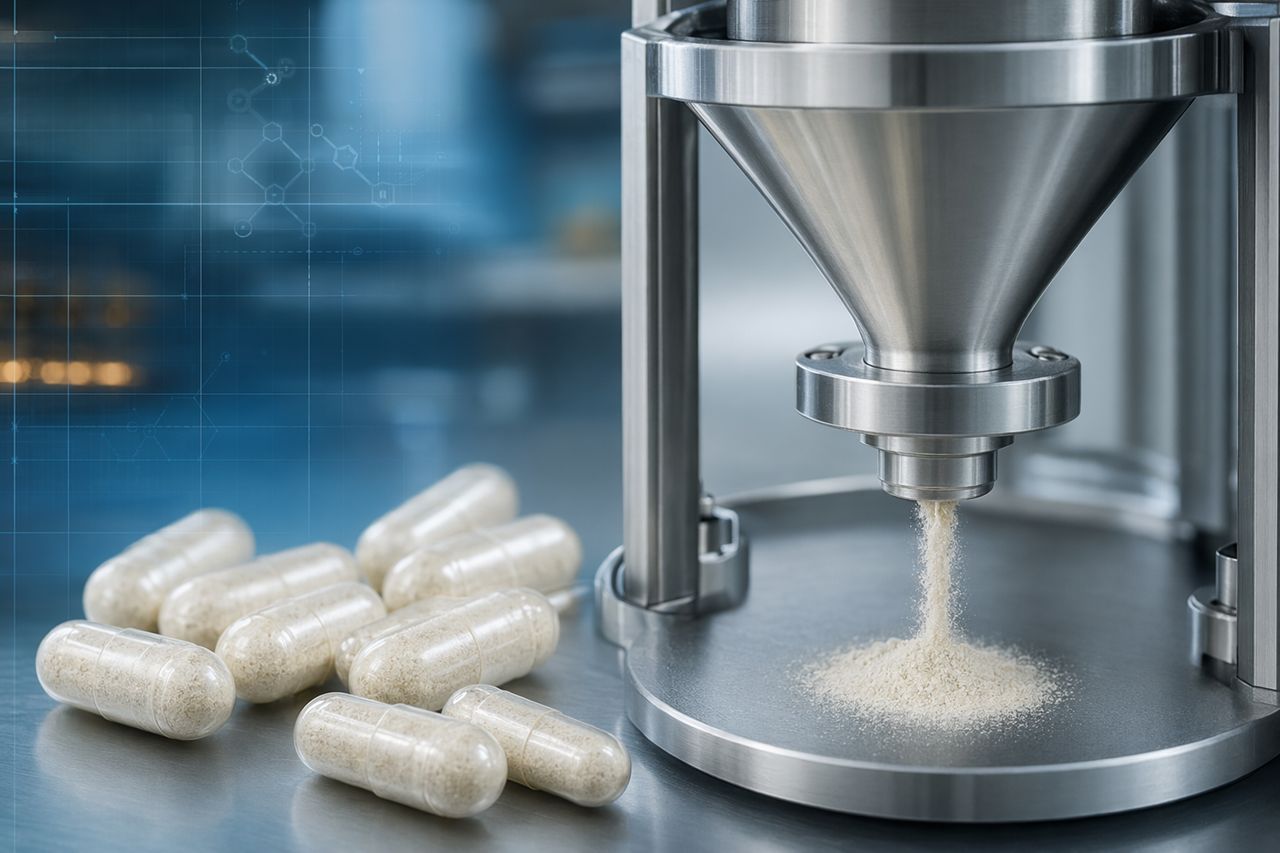
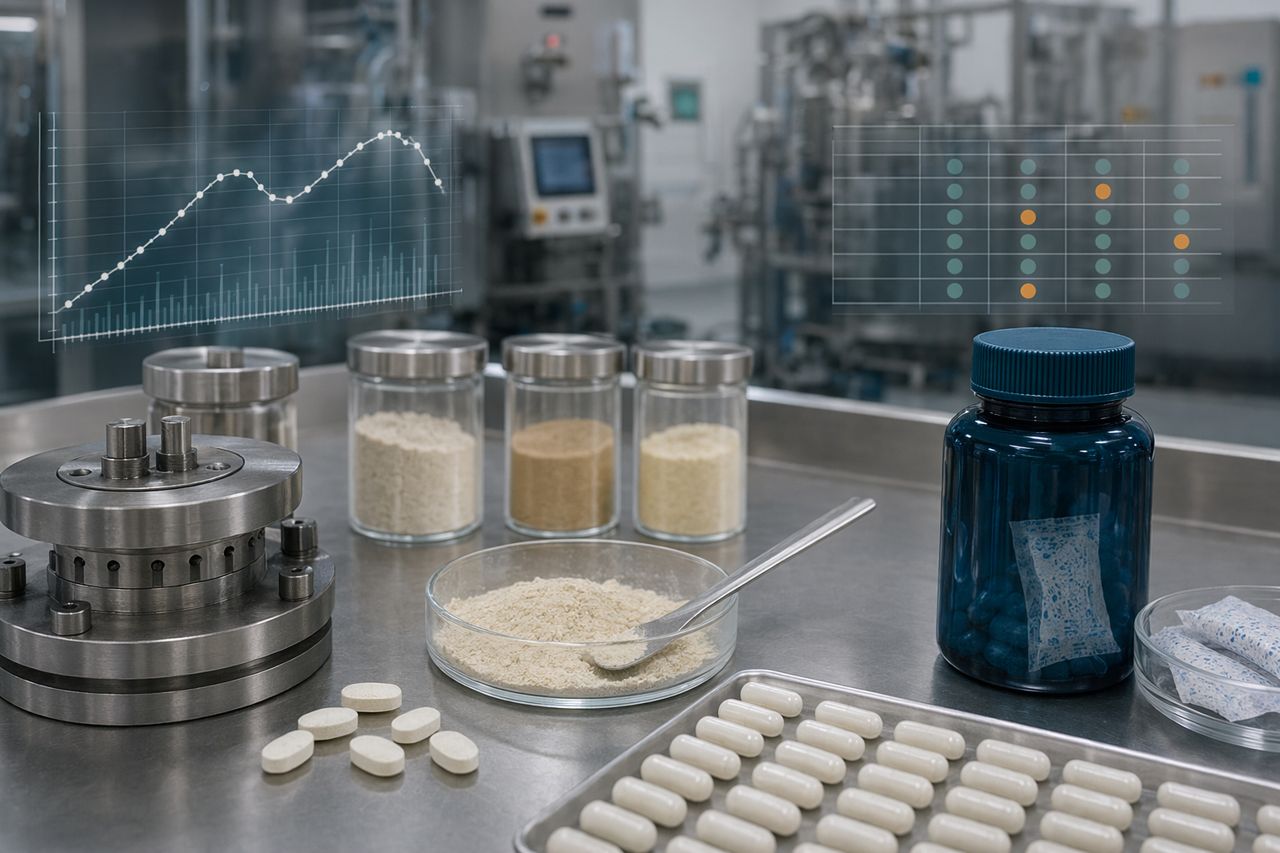
The visual style is clinical and industrial: transparent capsules rotating over stainless dosing equipment, powder flow under controlled lighting, formula grids, pH curves, batch-spec callouts, and clean production-room motion. No presenter, no avatar, no exaggerated wellness imagery.
Request a quote
If you are preparing a digestive enzyme capsule or tablet project, send CapsuleForge your formula brief, target potency presentation, dosage format, packaging preference, documentation requirements, and forecast volume.
Use the on-site request a quote form to start a technical review. We will help identify the inputs needed to build a practical manufacturing quote for your project.